
SHORING
SHORING
Temporary Support
Excavation Safety
Shoring Systems Designed For Safe & Efficient Excavation
Gulf Piling provides a complete range of shoring systems designed to support excavations safely and efficiently. Our solutions are tailored to project requirements, ground conditions, and excavation depths, ensuring stability, safety, and compliance throughout the construction process.

Gulf Pilling
Projects Completed
Projects Completed
Shoring up meaning the process of providing additional support to a structure during the construction process. This can include anything from scaffolding to steel reinforcement. It typically involves propping or jacking up existing structures. Which could otherwise collapse due to loose soil, subsidence, water infiltration or other factors.
Shoring helps to keep structures stable and secure, prevent them from shifting or bowing, and reduce the risk of failure. It also helps to strengthen the overall structure and increase its ability to support heavy loads.
Key Features
Key Features
Improved safety on the worksite
Shoring systems help protect the workforce in temporary holes or trenches, holding up earthen walls and unstable structures until the construction work resumes.
Minimised project costs
Using reliable shoring towers, such as those on offer at Gulf Pilling, can help you reduce your overall project costs. They promote improved efficiency by minimising the need for remedial work caused by the collapse of a structure, which could lead to construction delays and a loss of resources.
Team's peace of mind
With such a reliable safeguard in place, your team on the ground will have peace of mind knowing that they are well-protected. As a result, they will be able to focus on the project as they won’t have to worry about the structure suddenly collapsing on them.
Shoring Methods
Shoring Methods
H-Beam Shoring (King Post Wall)
H-Beam shoring, also known as King Post Wall, consists of steel H-sections installed at regular intervals with timber or precast concrete lagging placed between them during excavation. This economical solution is ideal for temporary earth retention in shallow to medium-depth excavations.

Sheet Pile Wall
Sheet pile walls are formed by driving interlocking steel sheet piles into the ground to create a continuous retaining wall. They are widely used for excavation support, groundwater control, and temporary or permanent retaining structures, particularly in soft soils and marine environments.
Contiguous Pile Wall
Contiguous pile walls are constructed using closely spaced reinforced concrete piles with small gaps between adjacent piles. They provide effective earth retention for deep excavations in stable ground where groundwater control is not a primary requirement.

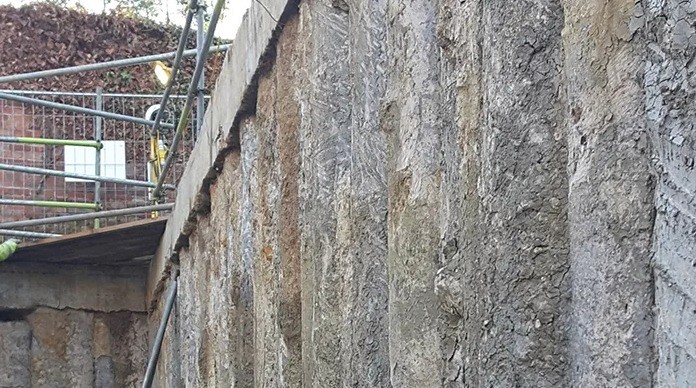
Secant Pile Wall
Secant pile walls are constructed using overlapping reinforced concrete piles to form a continuous retaining wall. They offer excellent ground support and are suitable for deep excavations, particularly where groundwater control and reduced ground movement are required.
Soil Nailing
Soil nailing is a ground stabilization technique that reinforces existing soil using closely spaced steel bars installed into the excavation face and secured with shotcrete. It is an efficient solution for stabilizing slopes, retaining walls, and deep excavations in suitable soil conditions.

Anchorage & Tiebacks
Anchorage and tiebacks are high-strength ground support systems used to provide lateral stability to retaining walls and shoring structures. Installed and prestressed into competent ground, they resist earth and groundwater pressures, control wall movement, and enable safe excavation for deep basements and underground structures.
Shoring Methods
Shoring Methods
H-Beam Shoring (King Post Wall)
H-Beam shoring, also known as King Post Wall, consists of steel H-sections installed at regular intervals with timber or precast concrete lagging placed between them during excavation. This economical solution is ideal for temporary earth retention in shallow to medium-depth excavations.
Sheet Pile Wall
Sheet pile walls are formed by driving interlocking steel sheet piles into the ground to create a continuous retaining wall. They are widely used for excavation support, groundwater control, and temporary or permanent retaining structures, particularly in soft soils and marine environments.
Contiguous Pile Wall
Contiguous pile walls are constructed using closely spaced reinforced concrete piles with small gaps between adjacent piles. They provide effective earth retention for deep excavations in stable ground where groundwater control is not a primary requirement.
Secant Pile Wall
Secant pile walls are constructed using overlapping reinforced concrete piles to form a continuous retaining wall. They offer excellent ground support and are suitable for deep excavations, particularly where groundwater control and reduced ground movement are required.
SHORING
SHORING
Temporary Support
Excavation Safety
Shoring Systems Designed For Safe & Efficient Excavation
Gulf Piling provides a complete range of shoring systems designed to support excavations safely and efficiently. Our solutions are tailored to project requirements, ground conditions, and excavation depths, ensuring stability, safety, and compliance throughout the construction process.
Gulf Pilling
Projects Completed
Shoring up meaning the process of providing additional support to a structure during the construction process. This can include anything from scaffolding to steel reinforcement. It typically involves propping or jacking up existing structures. Which could otherwise collapse due to loose soil, subsidence, water infiltration or other factors.
Shoring helps to keep structures stable and secure, prevent them from shifting or bowing, and reduce the risk of failure. It also helps to strengthen the overall structure and increase its ability to support heavy loads.
Key Features
Key Features
Improved safety on the worksite
Shoring systems help protect the workforce in temporary holes or trenches, holding up earthen walls and unstable structures until the construction work resumes.
Minimised project costs
Using reliable shoring towers, such as those on offer at Gulf Pilling, can help you reduce your overall project costs. They promote improved efficiency by minimising the need for remedial work caused by the collapse of a structure, which could lead to construction delays and a loss of resources.
Team's peace of mind
With such a reliable safeguard in place, your team on the ground will have peace of mind knowing that they are well-protected. As a result, they will be able to focus on the project as they won’t have to worry about the structure suddenly collapsing on them.
Shoring Methods
Shoring Methods
H-Beam Shoring (King Post Wall)
H-Beam shoring, also known as King Post Wall, consists of steel H-sections installed at regular intervals with timber or precast concrete lagging placed between them during excavation. This economical solution is ideal for temporary earth retention in shallow to medium-depth excavations.
Sheet Pile Wall
Sheet pile walls are formed by driving interlocking steel sheet piles into the ground to create a continuous retaining wall. They are widely used for excavation support, groundwater control, and temporary or permanent retaining structures, particularly in soft soils and marine environments.
Contiguous Pile Wall
Contiguous pile walls are constructed using closely spaced reinforced concrete piles with small gaps between adjacent piles. They provide effective earth retention for deep excavations in stable ground where groundwater control is not a primary requirement.
Secant Pile Wall
Secant pile walls are constructed using overlapping reinforced concrete piles to form a continuous retaining wall. They offer excellent ground support and are suitable for deep excavations, particularly where groundwater control and reduced ground movement are required.
Soil Nailing
Soil nailing is a ground stabilization technique that reinforces existing soil using closely spaced steel bars installed into the excavation face and secured with shotcrete. It is an efficient solution for stabilizing slopes, retaining walls, and deep excavations in suitable soil conditions.
Anchorage & Tiebacks
Anchorage and tiebacks are high-strength ground support systems used to provide lateral stability to retaining walls and shoring structures. Installed and prestressed into competent ground, they resist earth and groundwater pressures, control wall movement, and enable safe excavation for deep basements and underground structures.
Shoring Methods
Shoring Methods
H-Beam Shoring (King Post Wall)
H-Beam shoring, also known as King Post Wall, consists of steel H-sections installed at regular intervals with timber or precast concrete lagging placed between them during excavation. This economical solution is ideal for temporary earth retention in shallow to medium-depth excavations.
Sheet Pile Wall
Sheet pile walls are formed by driving interlocking steel sheet piles into the ground to create a continuous retaining wall. They are widely used for excavation support, groundwater control, and temporary or permanent retaining structures, particularly in soft soils and marine environments.
Contiguous Pile Wall
Contiguous pile walls are constructed using closely spaced reinforced concrete piles with small gaps between adjacent piles. They provide effective earth retention for deep excavations in stable ground where groundwater control is not a primary requirement.
Secant Pile Wall
Secant pile walls are constructed using overlapping reinforced concrete piles to form a continuous retaining wall. They offer excellent ground support and are suitable for deep excavations, particularly where groundwater control and reduced ground movement are required.
SHORING
SHORING
Temporary Support
Excavation Safety
Shoring Systems Designed For Safe & Efficient Excavation
Gulf Piling provides a complete range of shoring systems designed to support excavations safely and efficiently. Our solutions are tailored to project requirements, ground conditions, and excavation depths, ensuring stability, safety, and compliance throughout the construction process.
Gulf Pilling
Projects Completed
Shoring up meaning the process of providing additional support to a structure during the construction process. This can include anything from scaffolding to steel reinforcement. It typically involves propping or jacking up existing structures. Which could otherwise collapse due to loose soil, subsidence, water infiltration or other factors.
Shoring helps to keep structures stable and secure, prevent them from shifting or bowing, and reduce the risk of failure. It also helps to strengthen the overall structure and increase its ability to support heavy loads.
Key Features
Key Features
Improved safety on the worksite
Shoring systems help protect the workforce in temporary holes or trenches, holding up earthen walls and unstable structures until the construction work resumes.
Minimised project costs
Using reliable shoring towers, such as those on offer at Gulf Pilling, can help you reduce your overall project costs. They promote improved efficiency by minimising the need for remedial work caused by the collapse of a structure, which could lead to construction delays and a loss of resources.
Team's peace of mind
With such a reliable safeguard in place, your team on the ground will have peace of mind knowing that they are well-protected. As a result, they will be able to focus on the project as they won’t have to worry about the structure suddenly collapsing on them.
Shoring Methods
Shoring Methods
H-Beam Shoring (King Post Wall)
H-Beam shoring, also known as King Post Wall, consists of steel H-sections installed at regular intervals with timber or precast concrete lagging placed between them during excavation. This economical solution is ideal for temporary earth retention in shallow to medium-depth excavations.
Sheet Pile Wall
Sheet pile walls are formed by driving interlocking steel sheet piles into the ground to create a continuous retaining wall. They are widely used for excavation support, groundwater control, and temporary or permanent retaining structures, particularly in soft soils and marine environments.
Contiguous Pile Wall
Contiguous pile walls are constructed using closely spaced reinforced concrete piles with small gaps between adjacent piles. They provide effective earth retention for deep excavations in stable ground where groundwater control is not a primary requirement.
Secant Pile Wall
Secant pile walls are constructed using overlapping reinforced concrete piles to form a continuous retaining wall. They offer excellent ground support and are suitable for deep excavations, particularly where groundwater control and reduced ground movement are required.
Soil Nailing
Soil nailing is a ground stabilization technique that reinforces existing soil using closely spaced steel bars installed into the excavation face and secured with shotcrete. It is an efficient solution for stabilizing slopes, retaining walls, and deep excavations in suitable soil conditions.
Anchorage & Tiebacks
Anchorage and tiebacks are high-strength ground support systems used to provide lateral stability to retaining walls and shoring structures. Installed and prestressed into competent ground, they resist earth and groundwater pressures, control wall movement, and enable safe excavation for deep basements and underground structures.
Shoring Methods
Shoring Methods
H-Beam Shoring (King Post Wall)
H-Beam shoring, also known as King Post Wall, consists of steel H-sections installed at regular intervals with timber or precast concrete lagging placed between them during excavation. This economical solution is ideal for temporary earth retention in shallow to medium-depth excavations.
Sheet Pile Wall
Sheet pile walls are formed by driving interlocking steel sheet piles into the ground to create a continuous retaining wall. They are widely used for excavation support, groundwater control, and temporary or permanent retaining structures, particularly in soft soils and marine environments.
Contiguous Pile Wall
Contiguous pile walls are constructed using closely spaced reinforced concrete piles with small gaps between adjacent piles. They provide effective earth retention for deep excavations in stable ground where groundwater control is not a primary requirement.
Secant Pile Wall
Secant pile walls are constructed using overlapping reinforced concrete piles to form a continuous retaining wall. They offer excellent ground support and are suitable for deep excavations, particularly where groundwater control and reduced ground movement are required.